Wideum
Making complexity clear.
The brief
Wideum builds remote assistance software for smart glasses and smartphones: technology that lets a field technician fix a fault while someone watches from the other side of the world. Clients include OMV, MAPFRE, Komatsu, SEAT CUPRA, Comexi, Dalkia and Hitachi Energy.
The company was scaling fast and its website no longer did it justice: strong product, weak explanation. Within a wider brand and communications project advised by dircompartners, we led the new website project.
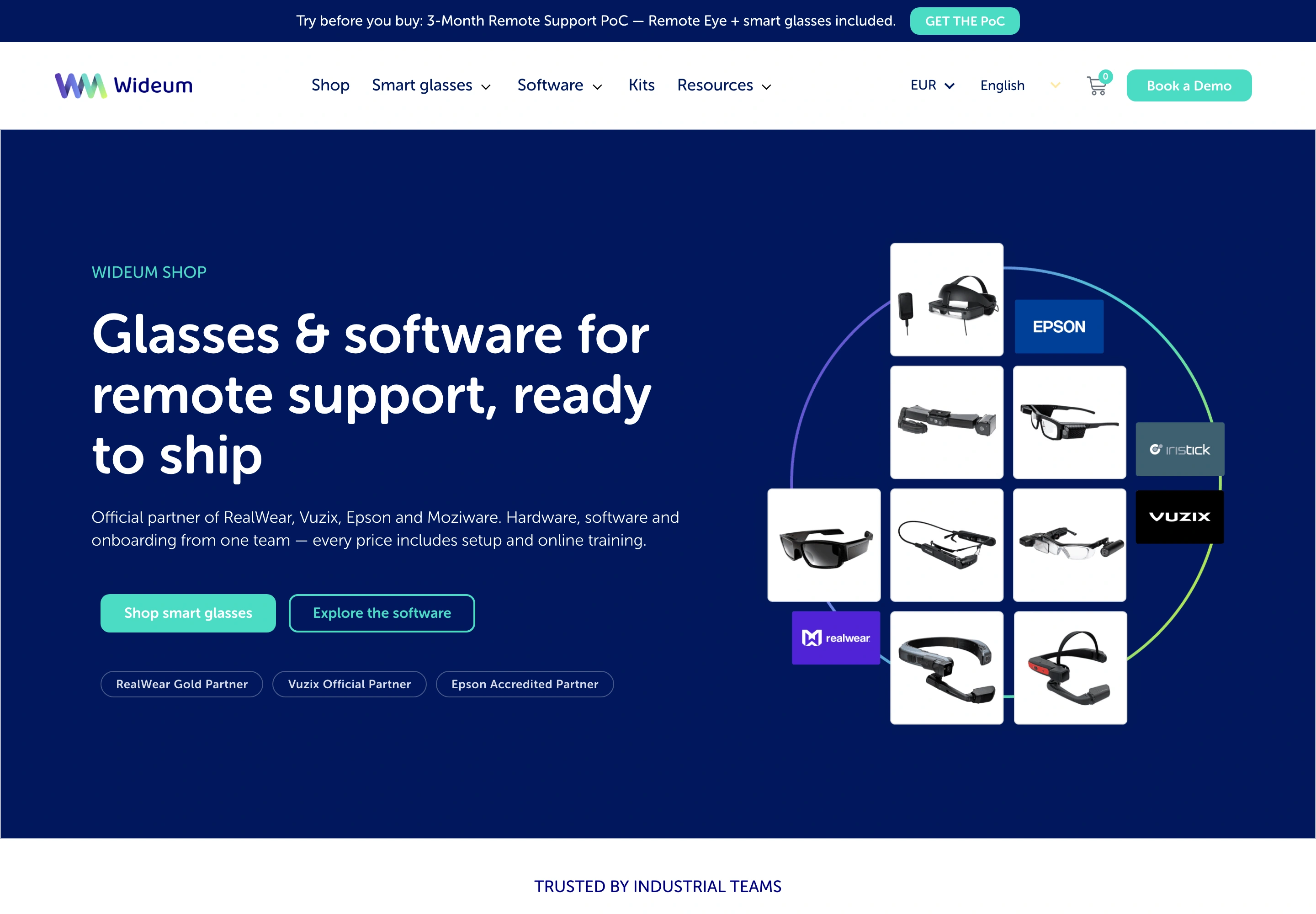
The work also includes the online shop and its strategy: shop.wideum.com. The website explains the technology and its applications; the shop turns that catalogue into an offer customers can buy.
What we did
We ran the web project end to end. Coordination between business, marketing and development: what the site had to do, in what order it got built and who decided what. Scale-up projects usually stall there, not in the code.
We sorted out a difficult catalogue. Wideum sells software, hardware (smart glasses), subscription plans and industry use cases all at once. We built an architecture that separates products, industries, resources and plans, so every visitor lands on their thing without reading the whole site.
We wrote it so it lands. The technical pitch —simultaneous voice translator, CRM and ERP integration via API and SSO, cloud or on-premise, ISO-27001, SOC-2, GDPR— turned into sentences a maintenance manager gets first time. And a free trial visible everywhere.
And then, the digital strategy. We didn’t close the project on launch day: we still run the company’s digital strategy, with the website at the centre of lead generation.
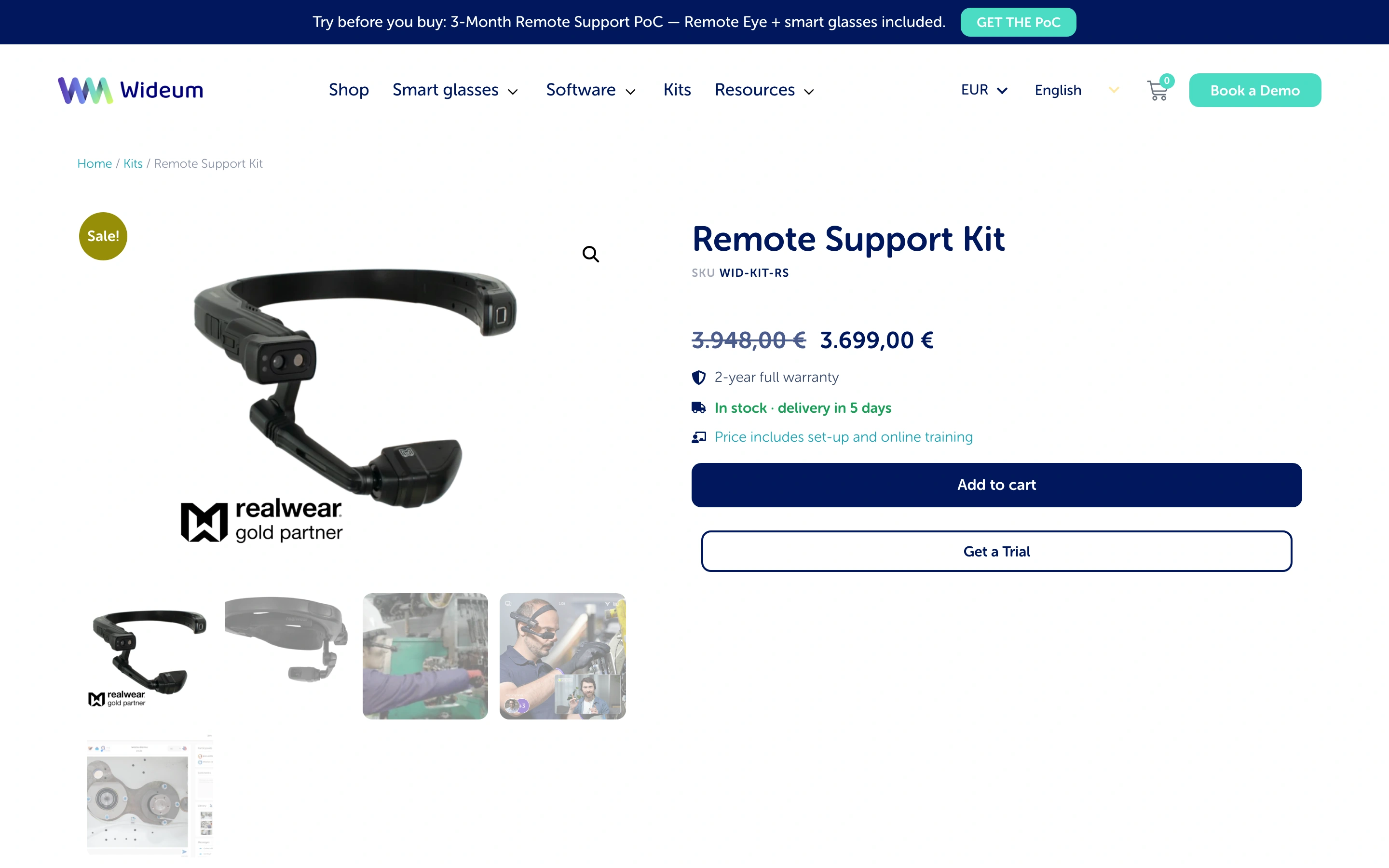
We created the shop and work on its strategy. At shop.wideum.com, the journey continues from understanding the product to choosing hardware, software and kits. A technical catalogue needs to explain what customers are buying and how each component fits, as well as listing its specifications.
A way into every product.
The more technical the product, the more a badly ordered website shows. The key wasn’t prettier design: it was deciding what gets explained first — and cutting everything that didn’t help someone ask for the free trial.
How remote assistance works
To write the website we had to understand the product the way a customer understands it, not the way a spec sheet explains it. It’s simple when you tell it in order: a technician in the field, with smart glasses or with a phone, shows live what is in front of them; an expert, from wherever they are, sees it, talks to them and marks up the image; and the breakdown gets fixed without anyone boarding a plane. Simultaneous voice translation, CRM and ERP integration, cloud or on-premise: all of that matters, but it comes after understanding that sequence.
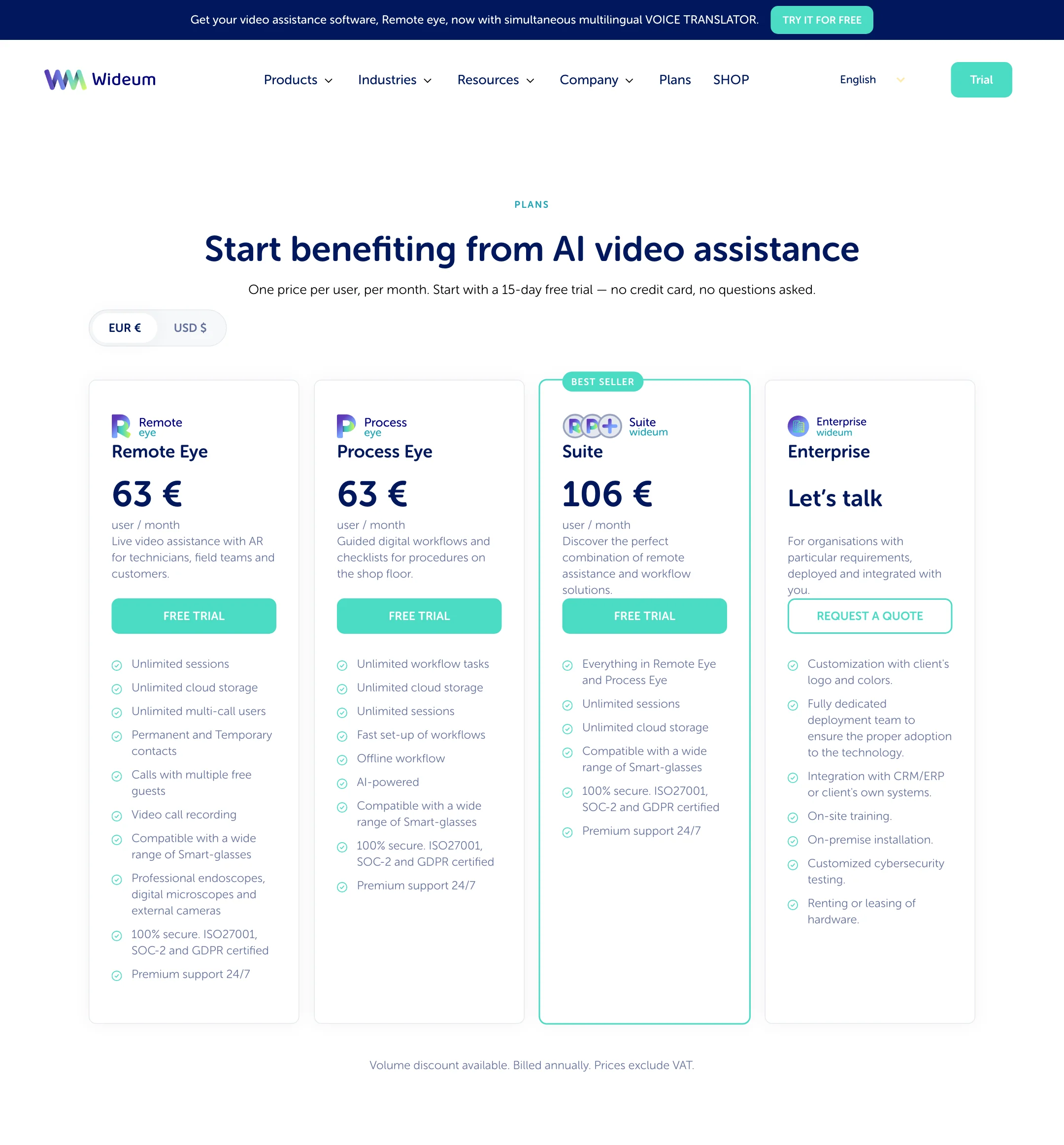
That is the architecture of the website too: first what it does, then who it is for (industries), then how it integrates and what it costs (plans). When the product is hard, the website has to be the order in which it is understood.
From understanding the product to choosing how to start
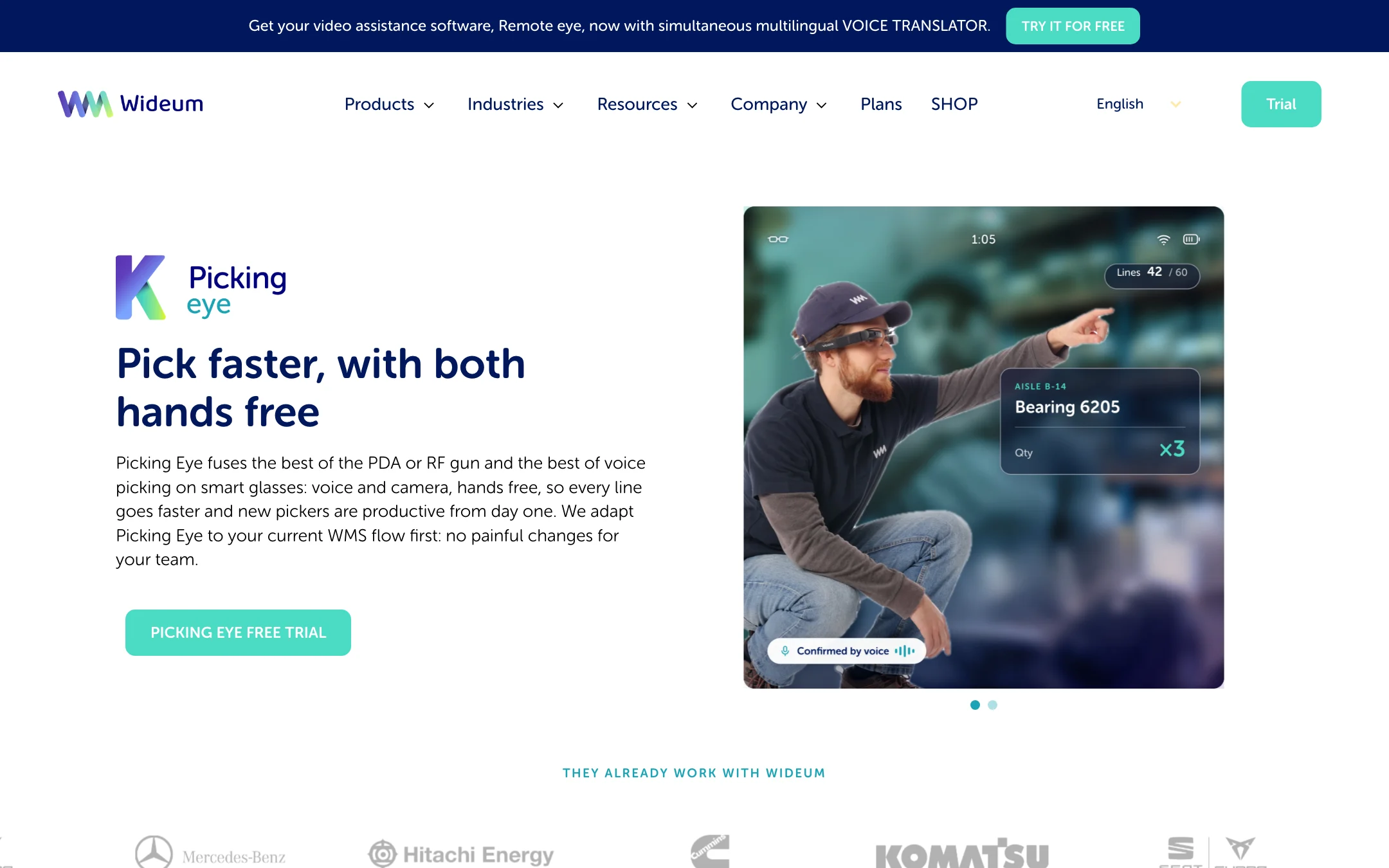
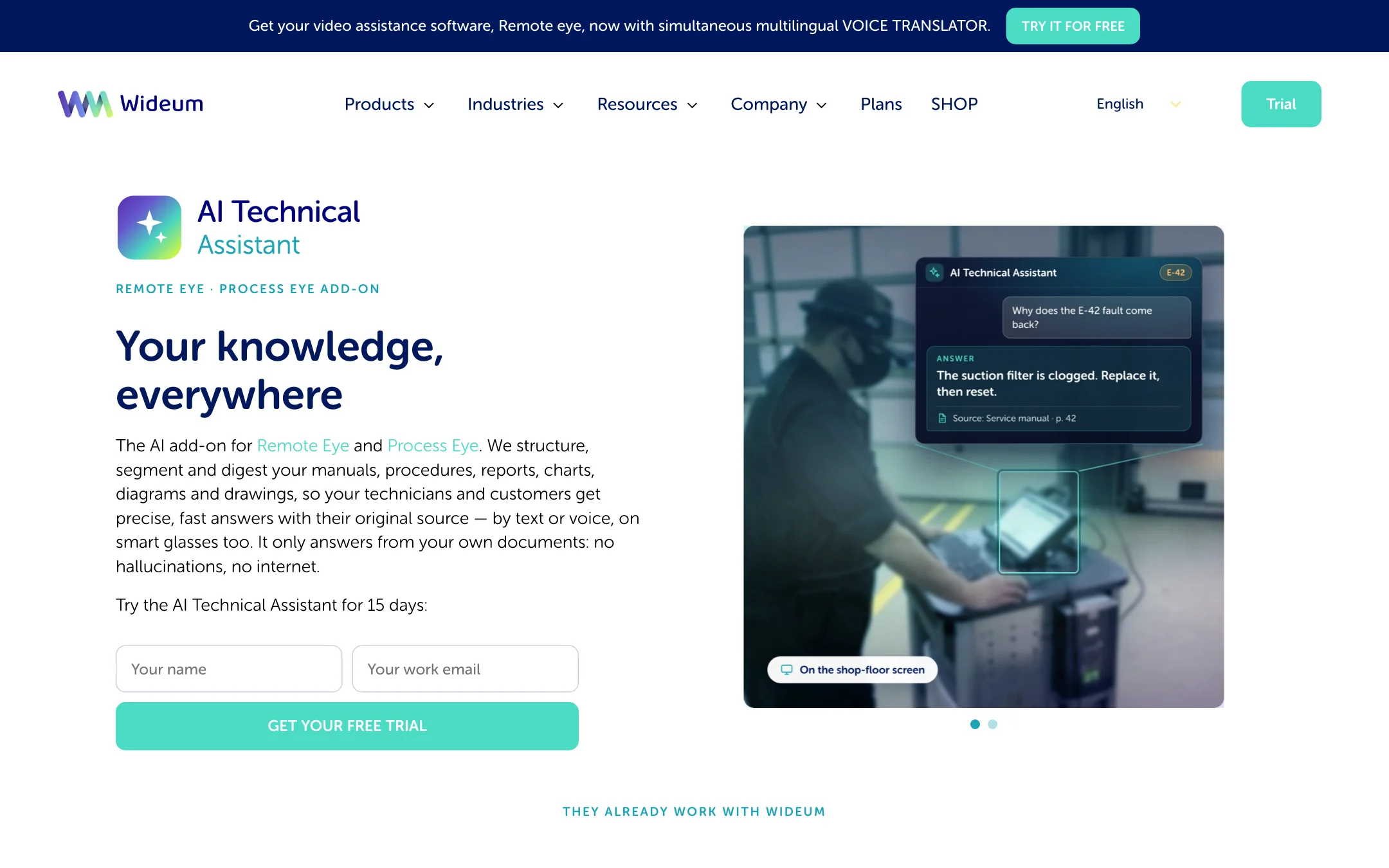
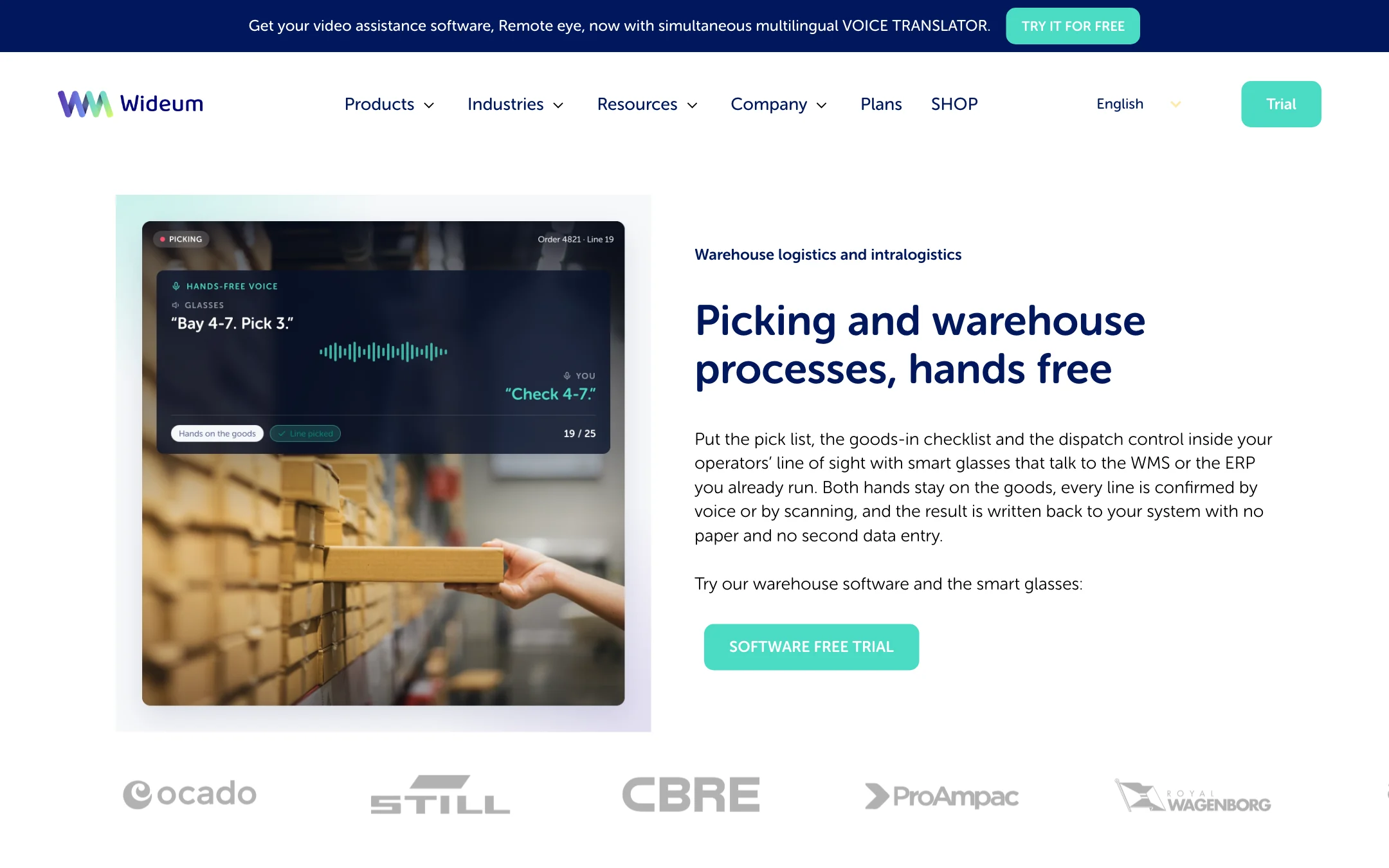
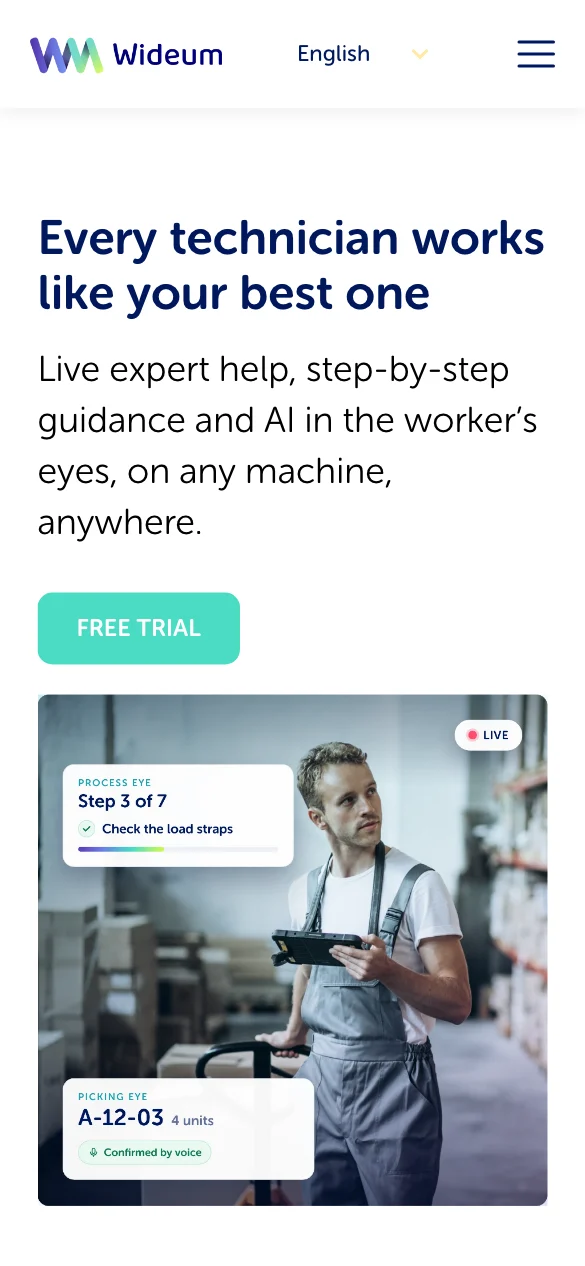
The current website presents Remote Eye, Process Eye and Picking Eye, alongside their add-ons and industry applications. The shop adds another layer: comparing devices, understanding compatible software and finding a combined offer.
One visible example is the Remote Support Kit: Navigator 520, a one-year Remote Eye licence for two users and a guided onboarding session. That relationship between hardware, software and onboarding is the subject of the new editorial film.
Website and shop documented on 24 September 2026. The captures show their state and offer on that date; the original project year remains 2025. Product photography and manufacturers’ marks come from Wideum’s public catalogue.
How it went
Gallery · the project in pictures (click to enlarge)
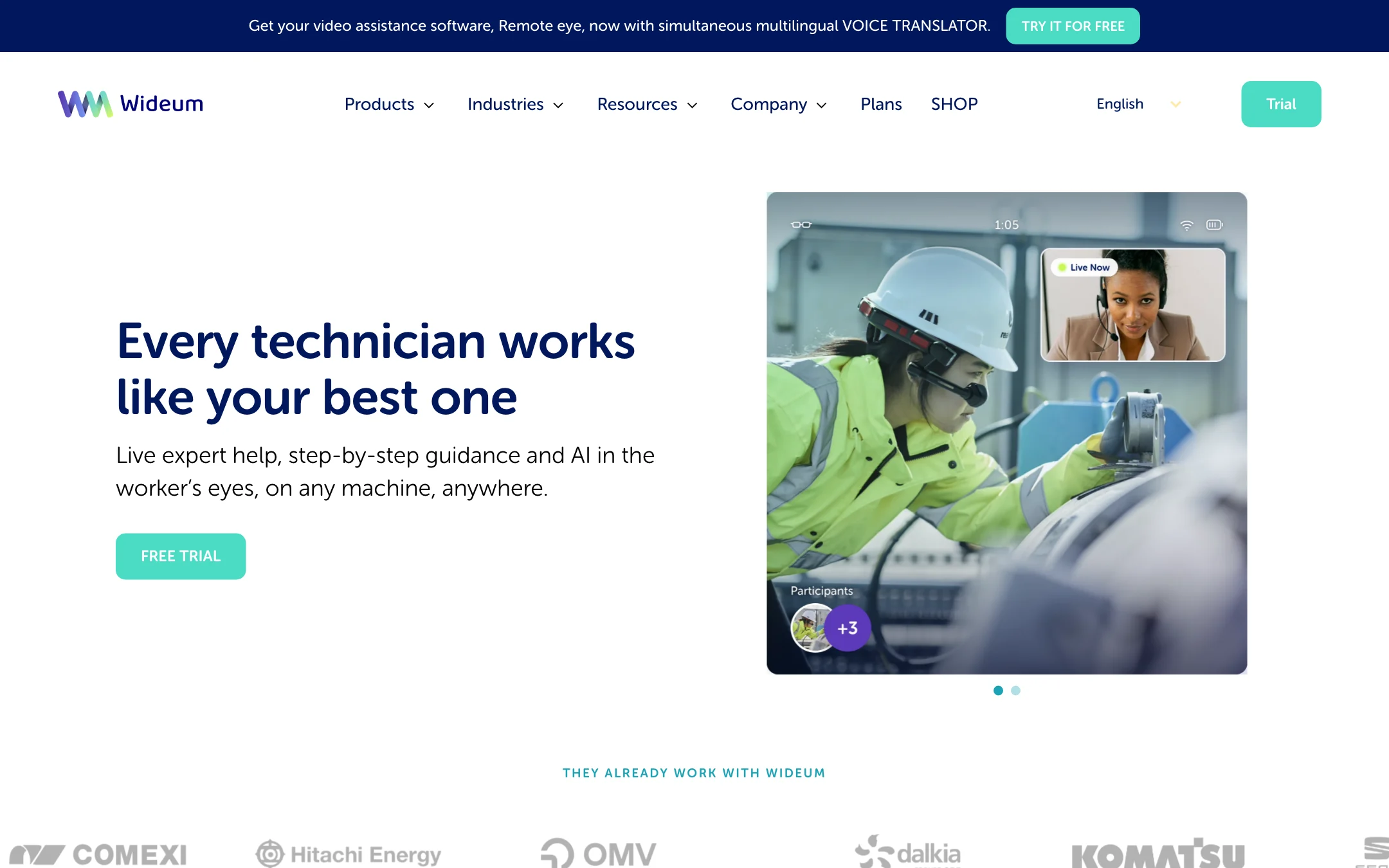
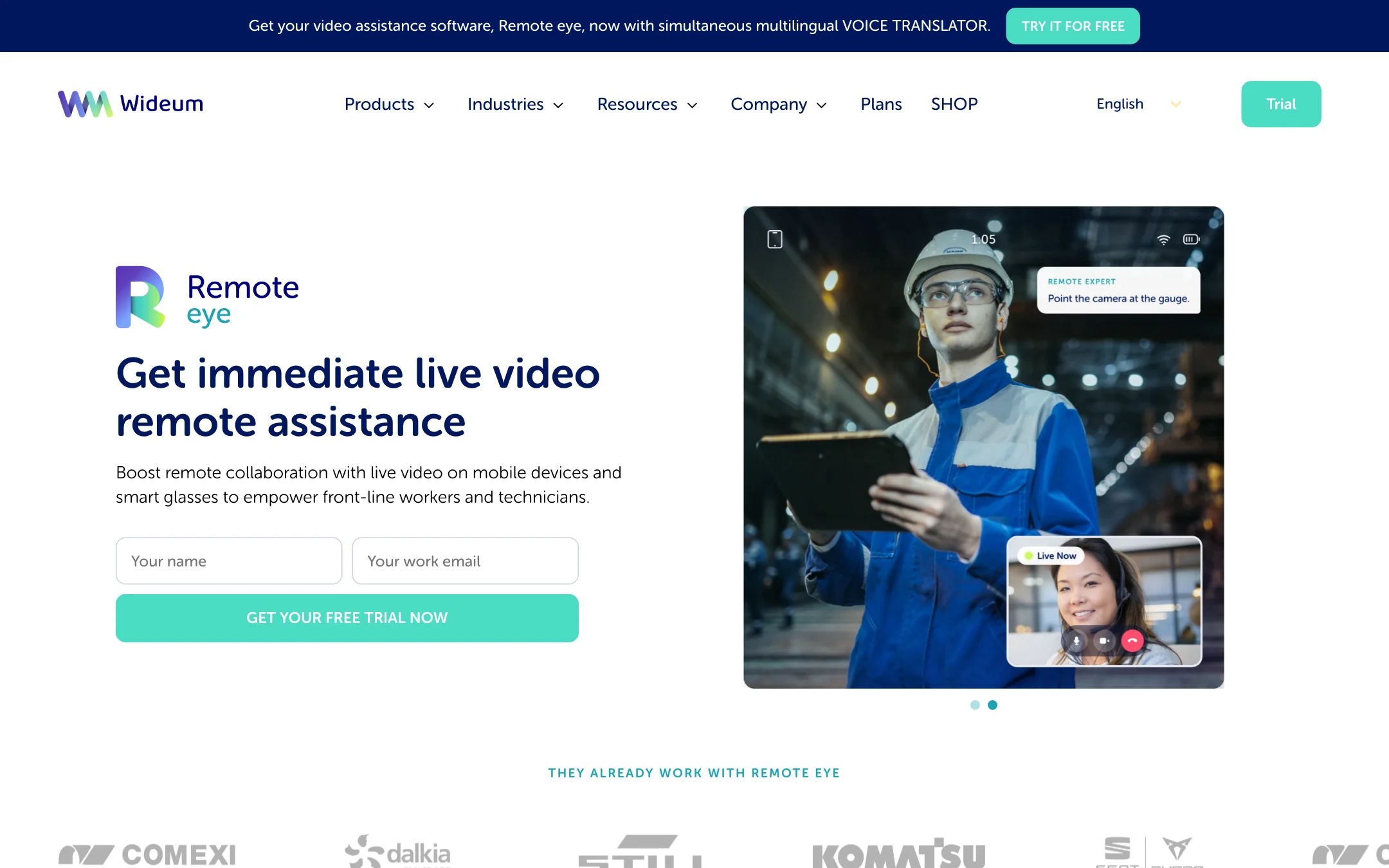
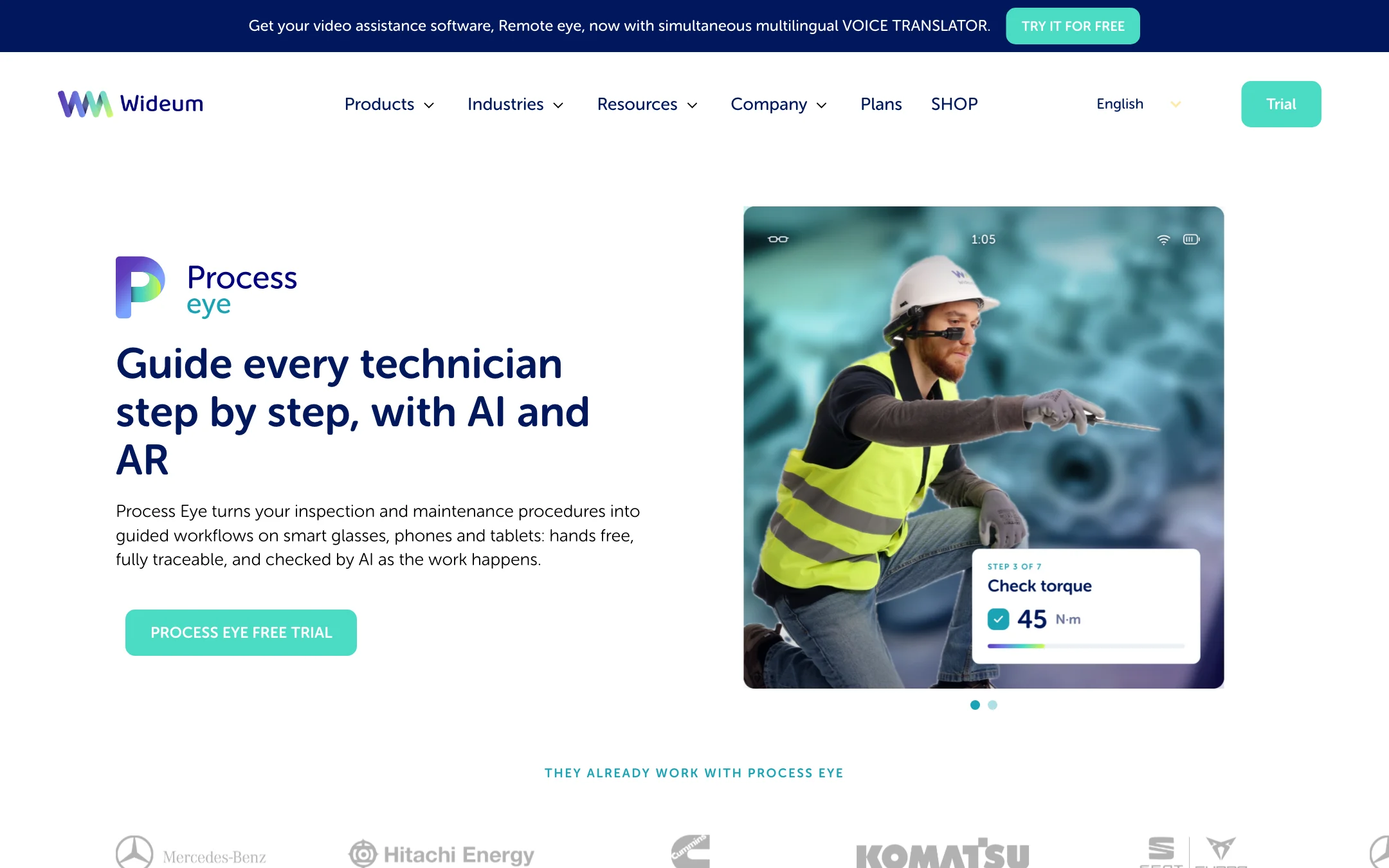
The product structure, translated to the web.
Each product keeps its own promise, with a clear entry point and a visible next step.
More images from the project 9 ↗
"Innovation and technology in the service of customer satisfaction."Wideum’s positioning
Want a result like this for your project?