AppMuseus · audioguías digitales y de código abierto para museos
The museum fits in your pocket.

The brief
Municipal museums had spent years stuck between two bad options: pay expensive licences for closed audioguides they can’t so much as touch, rent handsets that have to be handed out, collected and disinfected, or give up on digitising their heritage.
Cornellà City Council wanted to break that false choice: a modern audioguide with no app to install, no licence tying you down and no supplier who one day puts the price up or shuts up shop.
What we did
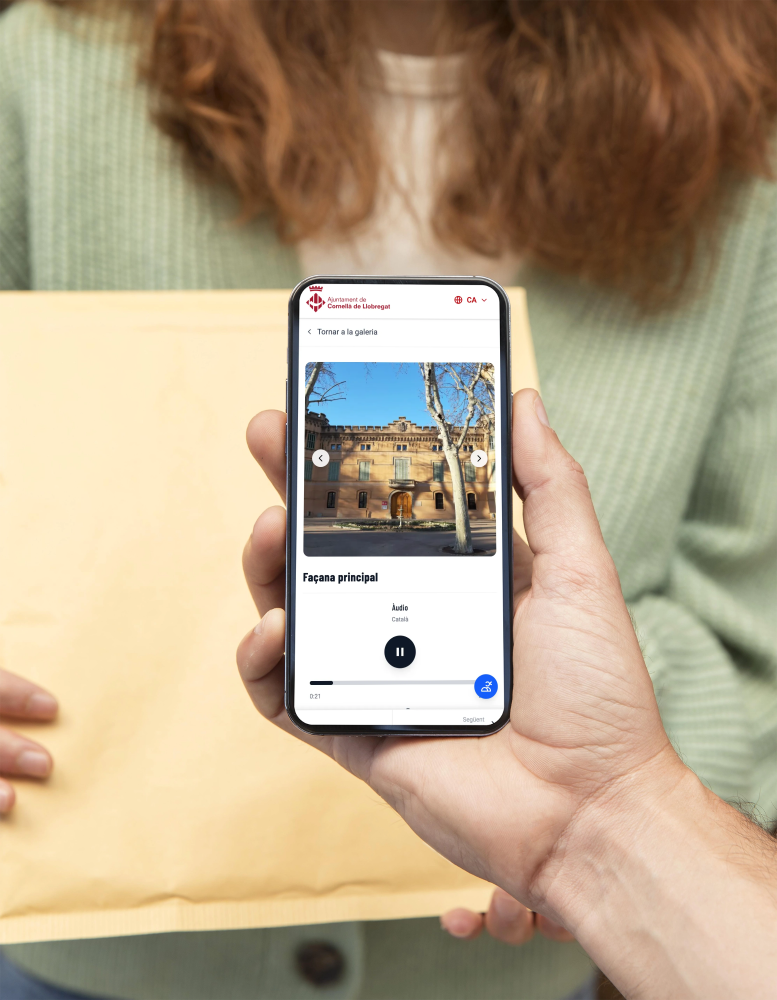
We built AppMuseus: a web platform with a QR code on every piece, room or route. Visitors scan with their phone camera, install nothing, pick a language and off they go. The same tool works inside the museum and as an open catalogue for browsing the collection from home, from school or from the other side of the planet.
Inside, proper content: audio, text, galleries, video, PDFs and full technical records for every piece. And real accessibility, not a footnote: audio descriptions, Catalan Sign Language (LSC) videos and easy-read built into the same record.
A clear admin panel for museum staff: content management, QR generator, redirects (changing a record doesn’t mean reprinting anything), user roles and scan statistics by QR, language and piece. Real data for annual reports and budgets.
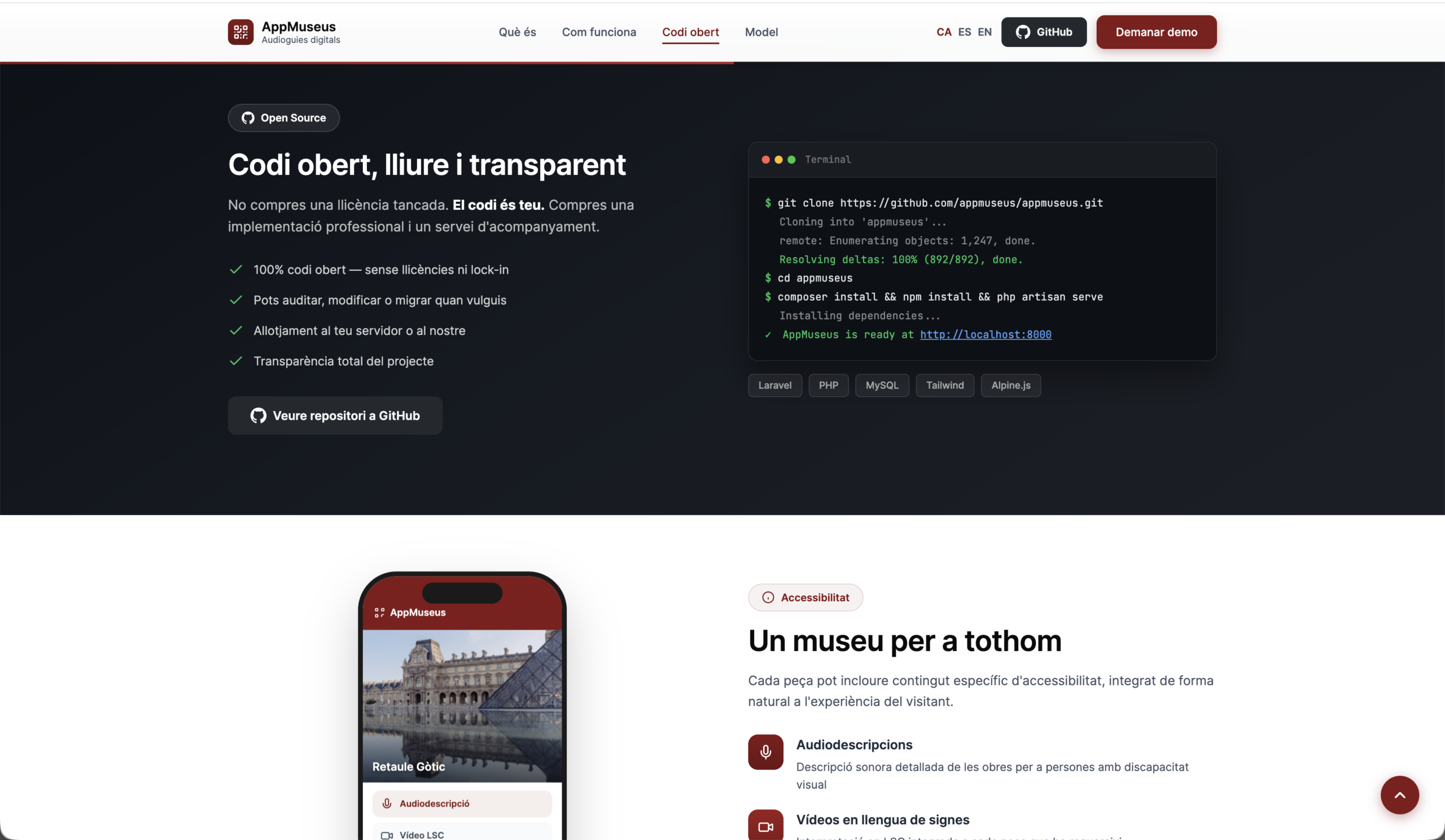
All in Catalan and Spanish, built on Laravel, with the code open on GitHub. Zero lock-in. We don’t sell you a licence, we sell you an implementation: the museum can audit it, change it, move it or carry on without us whenever it likes.
Listen without installing anything.
An audioguide is not a handset or an app: it is well-ordered content that opens with a phone camera. The key was betting on the web and on open source so a public museum’s heritage doesn’t depend on a private supplier’s price list.
A system the museum can keep growing
New content.The same QR.
A new story, a better image, a revised text. The museum team updates the page; the printed code continues to provide access.
What evolves
The content
Objects, rooms and routes
- Texts
- Audio guides
- Images and documents
What stays
The same QR
No need to reprint the codes
Where it is explored
During the visit
Scan and open in the phone’s browser.
In the web catalogue
Explore the collection from anywhere.
The team updates the content for objects, rooms or routes. The same printed QR continues to provide access. The content can be explored during the visit and in the web catalogue.
The project in numbers
How it works · and why it matters
The visitor journey is three steps. A QR code printed once on the piece, the room or the start of the route. It opens in the phone browser, nothing to install, and you pick a language. And the content for that piece appears: audio, text, gallery, video, sign language or easy-read, depending on what each person needs. If the record changes, the QR redirects and the printed sign still works.
What matters is the model, not the screen. Next to a closed licensed app or rented devices, AppMuseus changes who is in charge: the museum edits, the museum measures and the museum keeps everything if one day it decides to carry on without us.
| What it means | Audio guide with a closed app | Rented devices | AppMuseus |
|---|---|---|---|
| Installing something | ✗NoYou have to download an app | ✗NoYou pick up and return the device | ✓YesNothing: phone camera and browser |
| Recurring cost | ~PartlyAnnual licence per museum | ~PartlyDevice rental and upkeep | ✓YesOne implementation; no licence |
| Editing content | ~PartlyDepends on the vendor | ✗NoDown to the vendor | ✓YesYour own panel: entries, QR codes, redirects |
| Accessibility | ~PartlyDepends on the app | ~PartlyHeadphones and text | ✓YesAudio description, sign language, easy read |
| Languages | ~PartlyWhatever the licence covers | ~PartlyWhatever is recorded on the device | ✓YesCatalan and Spanish; more can be added |
| Usage data | ~PartlyDepends on the vendor | ✗NoNone | ✓YesScans by QR code, language and piece |
| Code | ✗NoClosed | ✗NoClosed | ✓YesOpen on GitHub, free licence |
| If the vendor disappears | ✗NoYou lose everything | ✗NoThe service goes | ✓YesThe museum keeps everything |
A comparison of models, not brands: every vendor is different.
The stack, since you asked: Laravel, PHP, MySQL, Tailwind, Alpine.js and Filament for the panel. Nothing exotic, on purpose: a council IT team has to be able to maintain it.
How it went
Gallery · the project in pictures (click to enlarge)
Look. Choose. Listen.
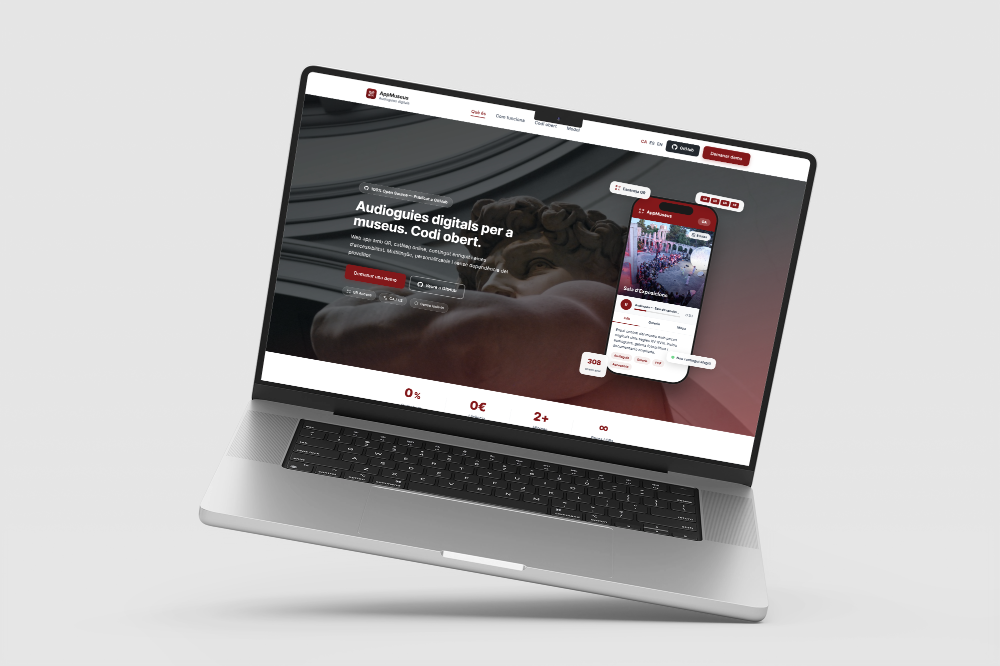
We created AppMuseus as an open tool so any museum can publish its catalogue and audio guides without asking visitors to install an app. Cornellà uses it in its museums: every object can have a QR code, online page, audio, languages and accessibility in the browser.
"Heritage that speaks by QR. And the code, genuinely open."The project team
Want a result like this for your project?